Earlier this year, Poudre School District sounded the alarm to direct attention to the youth mental health crisis actively unfolding for our students, especially the LGBTQIA+ community.
I was invited to participate in Poudre School District’s State of our Youth two-day conference in January. The event included PSD principles and staff as well as representatives from almost every organization that interacts with or handles children’s or parent’s issues (think Boy’s and Girl’s Club, BIPOC Alliance, Matthew’s House, FCMoD, etc.) I was there in my capacity as Lead Organizer for FoCo Comic Con.
Superintendent Brian Kingsley set the tone for the day: there is no one else to serve as backup, we are the ones tasked with supporting the degraded mental health of our students. From there, Dr. Cori Wong took over to facilitate discussions around how to define problem areas (day one) and how to begin to coordinate solutions (day two).
We split into groups based on our service areas and each group also had two students acting as leads, many of whom identified with historically disenfranchised communities (whether BIPOC, LGBTQIA+, or an intersection of multiple identities).
For some context, here’s where our kids are at:
The TL;DR version (seriously, stop what you’re doing and go watch the video) – per the Healthy Kids Colorado Survey 2021:
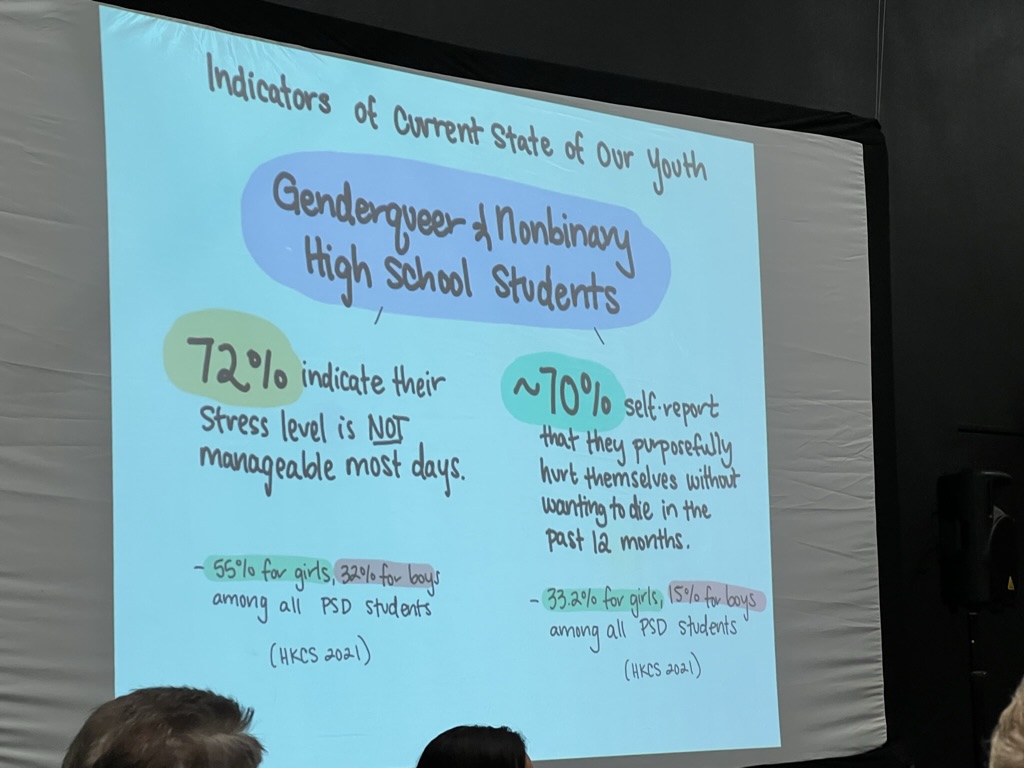
- 72% of genderqueer and nonbinary high school students report that their stress level is NOT manageable most days (55% for girls, 32% for boys among all PSD students)
- 70% of genderqueer and nonbinary high school students report purposefully hurting themselves without suicidal intent in the past 12 months (compared to 33.2% for girls and 15% for boys among all PSD students).
- 70% of PSD staff indicate moderate or extreme concern about students’ emotional well-being.
- 46% of PSD’s Hispanic families indicate they are not taking advantage of opportunities outside school (35% for all PSD families)
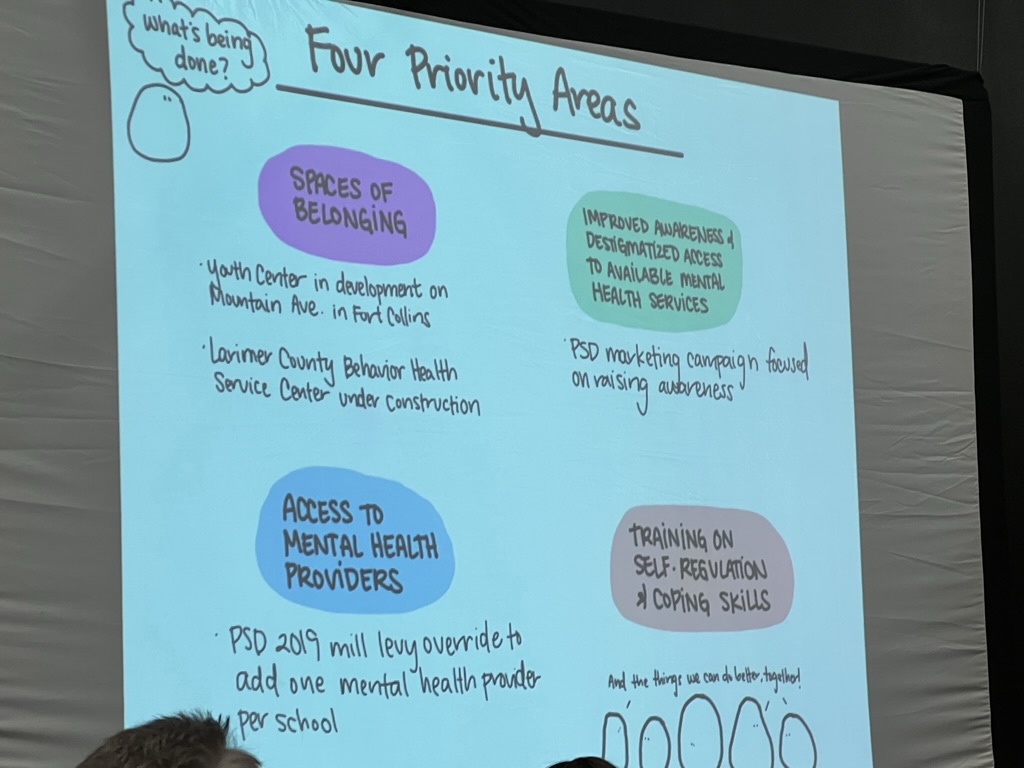
- Students indicated 4 critical need areas:
- Spaces of Belonging
- Improved Awareness + Destigmitized Access to Available Mental Health Services
- Access to Mental Health Providers
- Training on Self-Regulation + Coping Skills
In our group, Spaces of Belonging came up quite a lot from our students, and in particular, the need to program-in-place. That is: host events and build services in place at schools to service both students and families without requiring them to travel elsewhere. More on this in a minute.
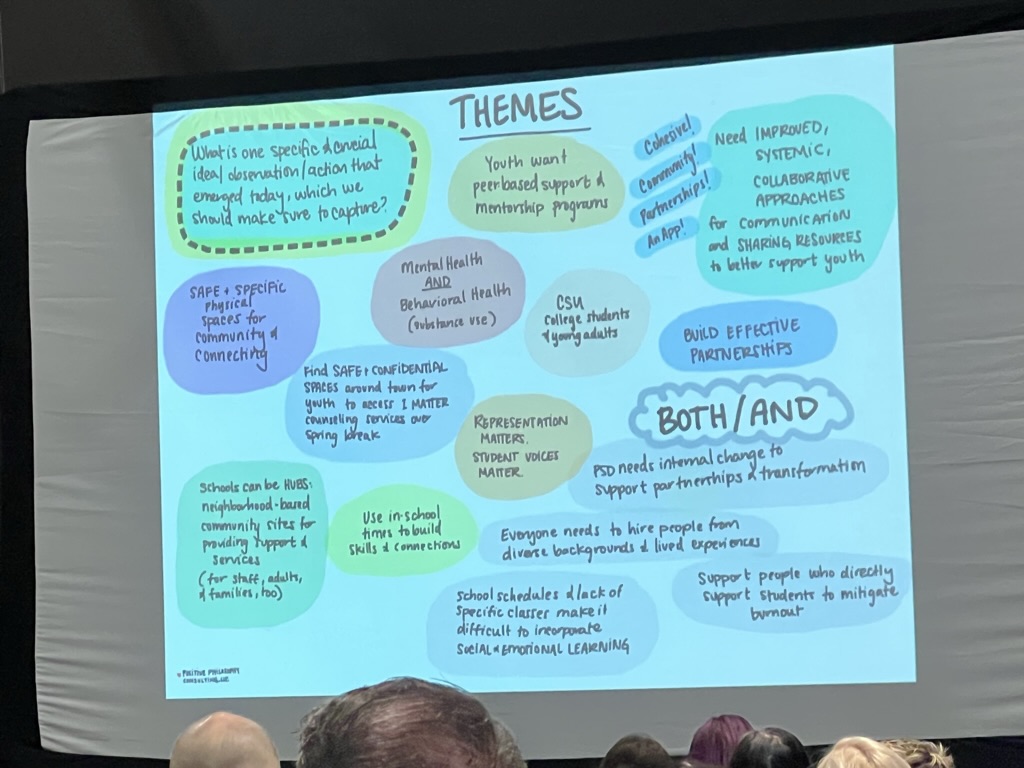


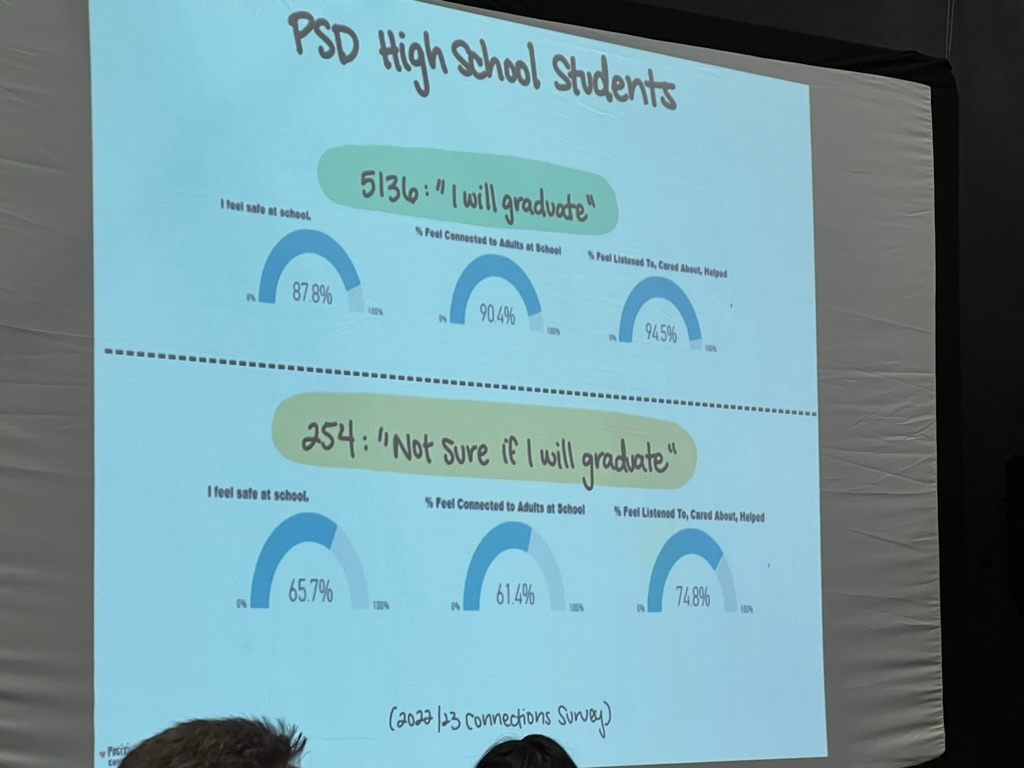
The data doesn’t exist in a vacuum and neither do the solutions. A number of this year’s cohort of Leadership Fort Collins were in the room or otherwise connected to this idea, and as a result, a large number of projects from this year’s cohort were focused on mental health and belonging.
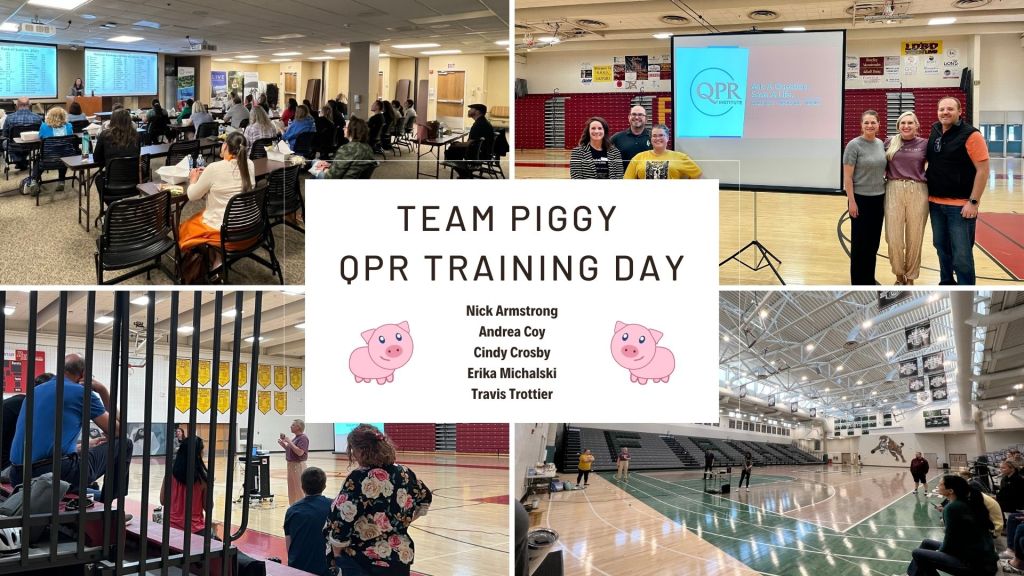
Our group’s project focused on providing training in QPR for parents by the Alliance for Suicide Prevention. QPR is like CPR but for mental health resources – it teaches you through an evidence-based framework how to ask if someone is suicidal and how to properly provide resources. The ASP provides multiple trainings each month, including one on Zoom. It’s nowhere near as uncomfortable as the subject matter would seem.
Over the course of 3 trainings and a full day, along with help from Poudre School District and UCHealth, our Leadership Fort Collins team was able to get 150 folks trained and helped initiate a new program that includes QPR training in the annual Back to School events.
More than that, as a team and with the blessing of the Poudre River Public Library District, our team at Fort Collins Comic Con has decided to make the Alliance for Suicide Prevention our beneficiary for 2023. We can’t wait to help.
Mulberry – Reconnected?
When thinking in the larger context: how we get kids from place to place is really important, and nowhere more so than our neighborhoods. During this same timeframe, the City’s Active Modes Plan was solidified and began to impact how the City can prioritize interconnectivity for kid-friendly transportation modes. In order to get kids to the services and programming they need, we really can’t rely on tying up a parent or caregiver’s transportation mechanism, work time, or other household or familial necessities. Therefore, active modes planning is a critical component to a community’s mental health resourcing.
North East Fort Collins in particular has an utter lack of active mode transit methodologies, meaning it’s the single most disconnected area of Fort Collins. This is due in part to a patchwork of service areas and overlap with Larimer County, and also in part to piecemeal development decisions.
When development is poorly planned, you end up with sprawl and patchwork solutions.
In February, the City of Fort Collins hosted a Super Issues Meeting around the Mulberry Corridor Annexation where a ton of really interesting information was shared about how and why this might progress.
Think about that for a moment: Mulberry from I-25 to Timberline, one of the key entrypoints into Fort Collins, is not *actually* in the City, yet, despite neighborhoods existing and actively being built along that corridor. It’s a wide array of commercial, industrial, residential, and open space which has suffered problematic criminal behavior along the hotel row in the past.
The big picture: the Mulberry annexation will be slow, step-by-step, and there will be a lot of input between stakeholders. Most frustrating: there will still be a portion of Mulberry along Timberline that will NOT be annexed, meaning there will still be some disconnectivity even while things like sidewalks are modernized and brought up to City standards.
If you get a chance to attend one of these annexation meetings, please do – so many steps will happen along the way and everyone who has good ideas should provide some input.
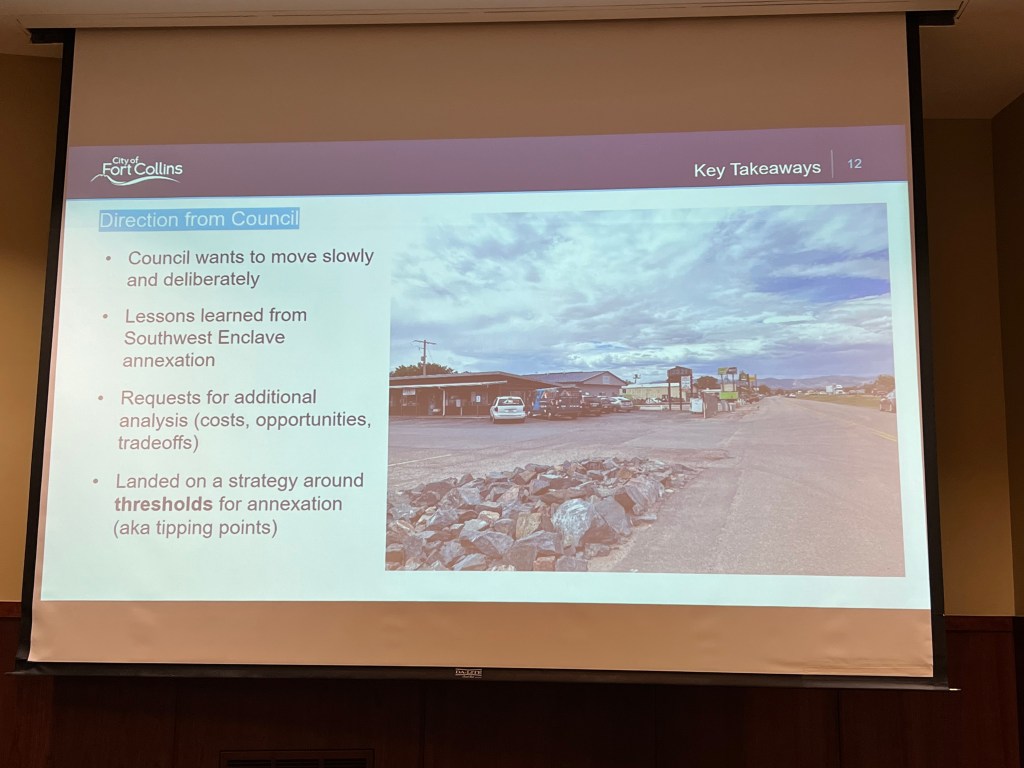
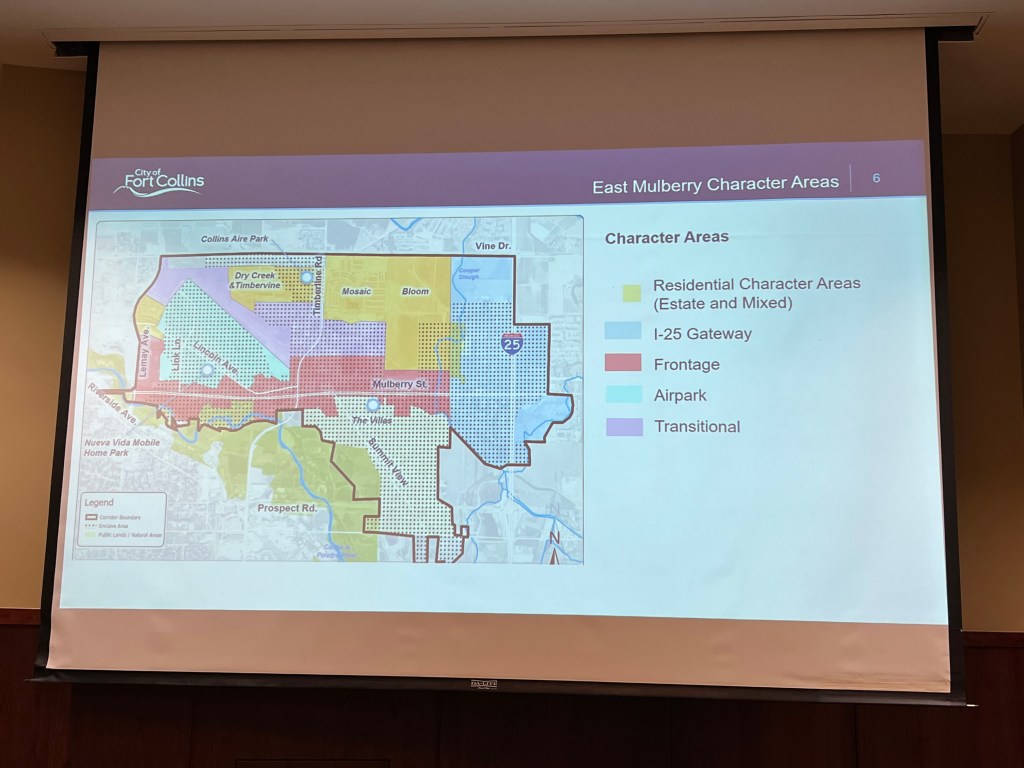

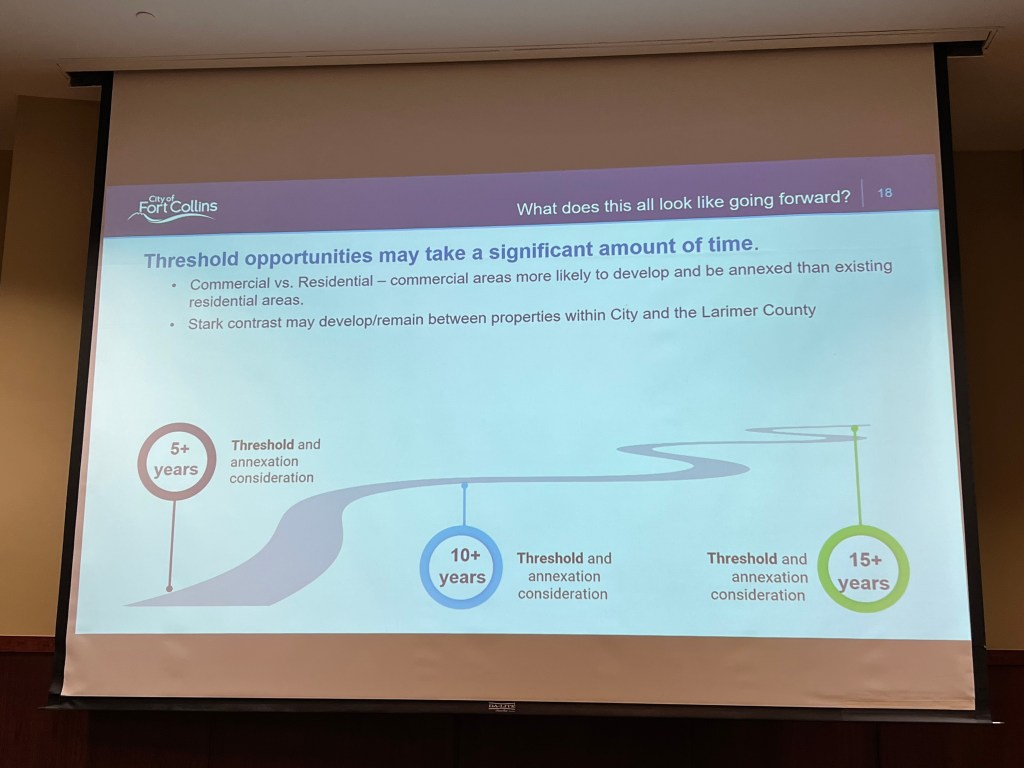
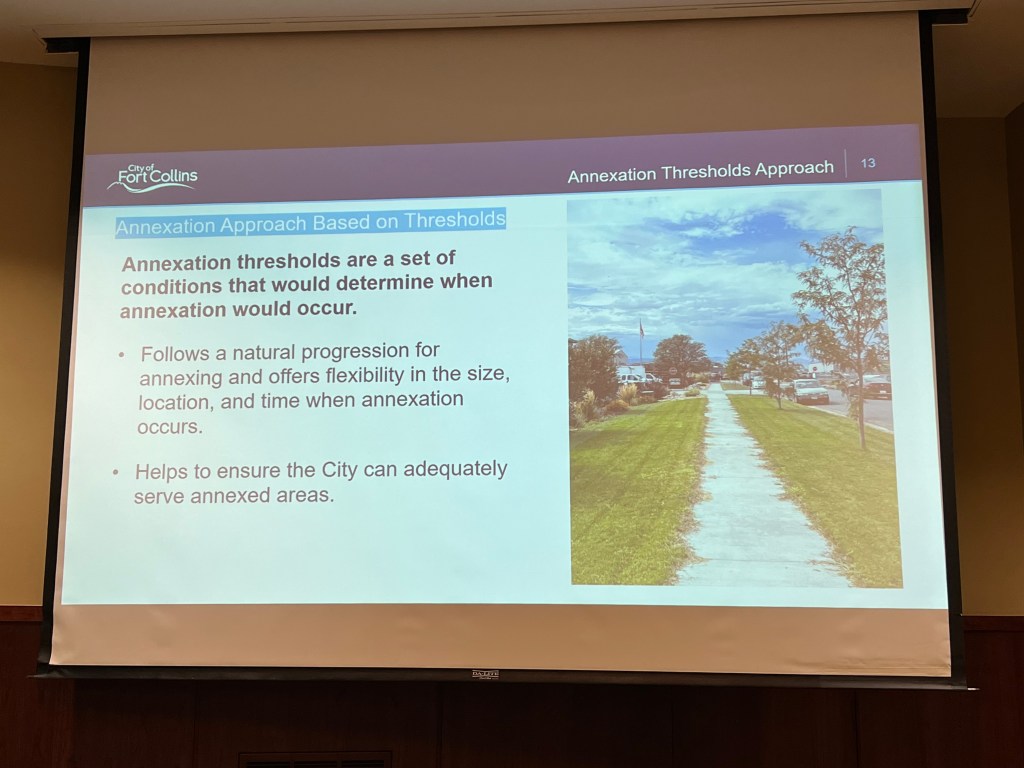
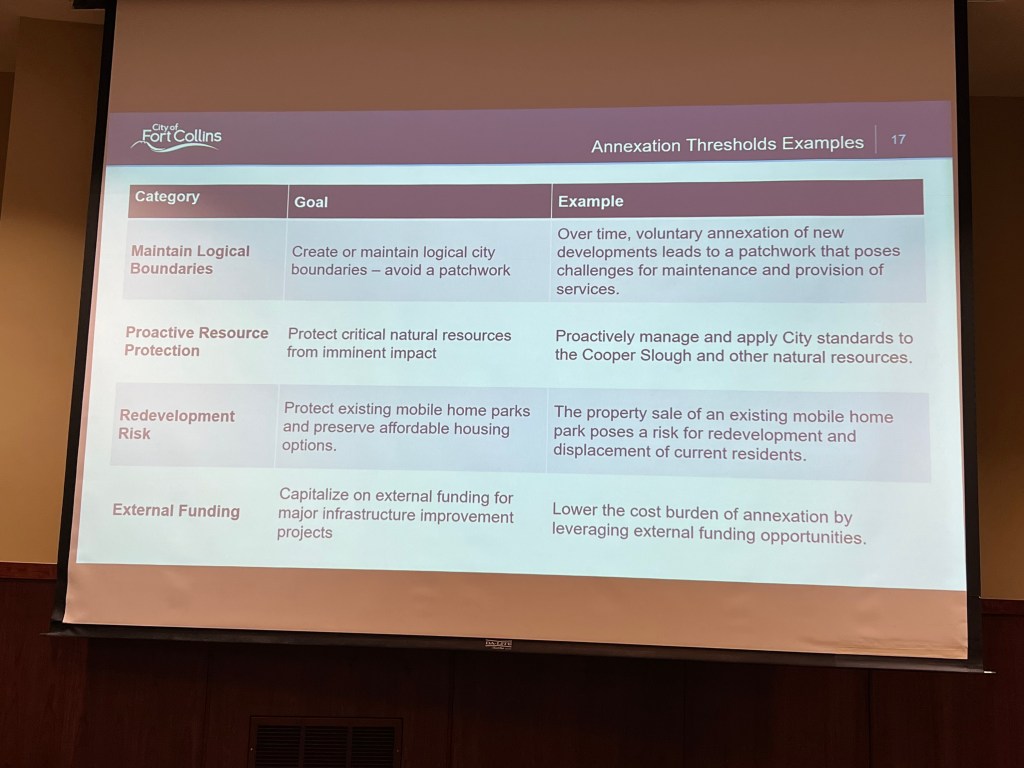

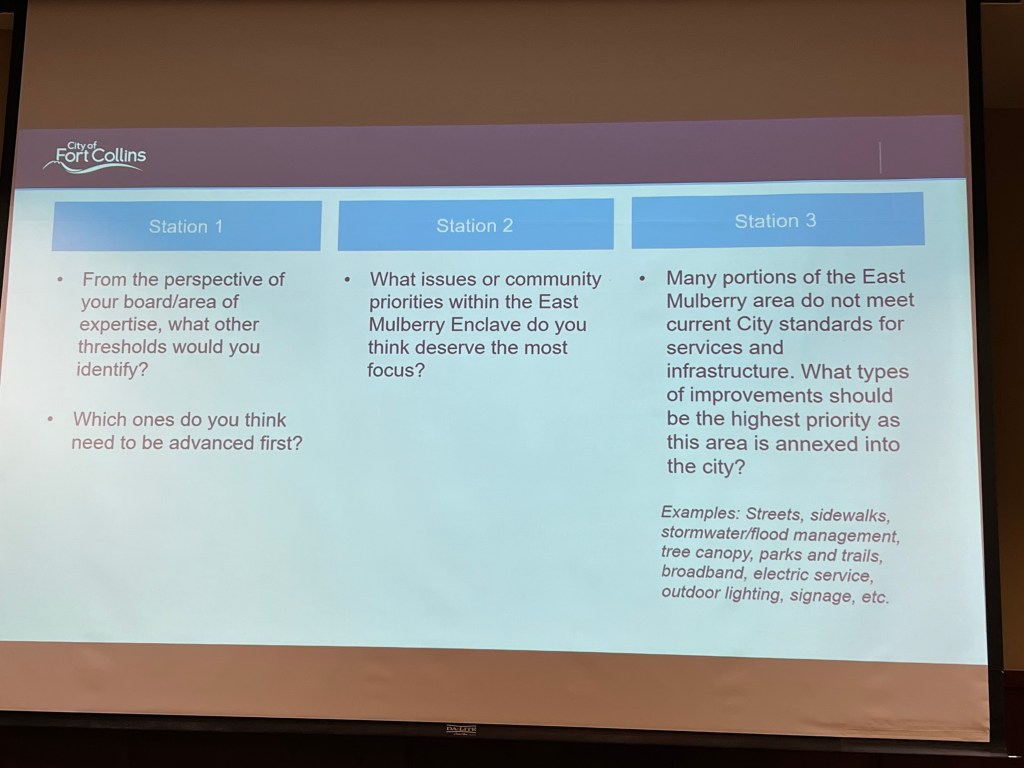
Mulberry Annexation is estimated to cost between $85 million and $585M depending on who you ask, but here’s the most important component: improving mental health clearly requires programming in place, so making this area as connected and cohesive as possible needs to be a priority. As the residential areas bloom in this space, so to must our commitment to active modes planning and proper annexation.
 Nick Armstrong